Innovative Laser-based Welding
- 1
LPKF的新型激光焊接技术无需激光透明部件即可焊接塑料组件
- 2
该技术促进了电动汽车组件的设计创新
- 3
Schaeffler集团是该技术的早期采用者之一
- 4
技术应用范围广泛,可能影响多个行业
LPKF公司推出了一种创新的激光焊接技术,该技术可以在不使用激光透明部件的情况下焊接塑料组件,推动了电动汽车领域的进步。这项技术的早期采用者Schaeffler集团设计了一个无法通过传统激光焊接技术制造的电动汽车组件。该技术的应用范围广泛,不仅限于汽车领域,还可能影响到医疗和其他行业。
Sponsored By
Innovative Laser-based Welding Drives Advances in e-Mobility
LPKF’s novel technology welds plastic components without requiring the use of a laser-transparent part.

April 27, 2026
2 Min Read

An early adopter of the technology, the Schaeffler Group was able to design an e-mobility component that could not have been manufactured using conventional laser-welding techniques.LPKF Laser & Electronics SE
LPKF Laser & Electronics SE is reporting positive response from industrial users just one year after the market launch of its Absorbing-to-Absorbing technology (ATA) for laser welding of plastics.
As one of the first adopters, the Schaeffler Group is already successfully using the innovative laser plastic welding process for the development of e-mobility components. The ATA process enables the laser welding of two absorbing plastic components, opening up new design possibilities for both prototyping and series production.
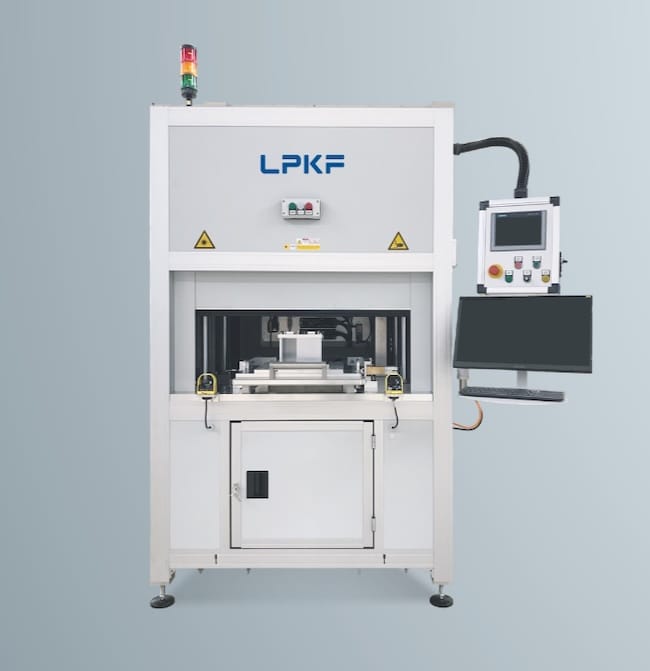
LPKF’s new plastic laser welding system bonds absorbing materials. Image courtesy of LPKF Laser & Electronics SE.
Overcoming the transparent-to-absorber principle
ATA technology advances laser plastic welding by overcoming the previously required transparent-to-absorber principle, whereby one of the plastic components for welding had to be transparent. Designers can now use only absorbing materials when welding plastic components, creating significantly greater design freedom. Integrated thermography monitoring enables precise process control and continuous product optimization.
Related: Covestro Showcases ‘Material Effect’ on Emerging Technologies at Chinaplas
Enormous e-mobility potential
The ATA process is suitable for prototyping and R&D applications as well as for series production. "The market response to our ATA process shows that we have closed a real gap in laser plastic welding with this technology," said LPKF Product Manager Luis Huber. "We see enormous potential, particularly in consumer electronics and e-mobility, where industry demands innovative soluti
相关情报
国家邮政局:推进邮政领域禁限塑政策落实——对十四届全国人大四次会议第1275号建议的答复
国家邮政局经商市场监管总局,正式答复全国人大代表关于推进邮政领域禁限塑政策落实的建议。文件披露:十四五期间全行业塑料包装袋厚度减量50%、塑料胶带减量25%;2022年底北京、上海、江苏、浙江、福建、广东及海南率先实现禁塑目标;2025年将快递禁限塑纳入《快递暂行条例》;中国邮政在8省42地市投放生物降解竹快递袋;邮政、京东、顺丰、韵达在20余城市试点快递循环包装;快递包装绿色产品认证已颁发291张证书;全行业包装标准化率达86%。下一步将制定以竹代塑指导意见、扩大禁塑产品范围(含发泡保温箱、气泡袋等)、强化执法稽查和溯源认证体系。
塑料循环经济中,化工可以做什么?
本文以南京盛庆和化工的行业视角,系统阐述化工行业在塑料循环经济中的角色与路径。文章指出中国塑料消费量占全球15%,但2020年废塑料回收率仅23.09%,循环利用任重道远。核心讨论了机械回收与化学回收两种技术的优劣:机械回收成本高、分拣难、产品降级利用;化学回收可将废塑料拆分为单体实现闭环,但技术尚不成熟、经济性待验证。文章以赢创(Evonik)为例,展示了化工助剂(表面活性剂、消泡剂、润湿剂、VESTOPLAST®相容剂等)在提升机械回收效率与再生料性能方面的关键作用,以及甲醇醇解化学回收PET的研发进展。结论强调:发展塑料循环经济需要技术突破、产业链全生命周期合作、政策引导与消费者意识提高的四方协同。
塑料化学回收连获重大突破,国内产业化在即,全新万亿级风口正在到来!_裂解_技术_循环
塑料化学回收技术在中国取得了重大突破,特别是在生物酶解聚PET再生工业化装置和混合废塑料深度催化裂解(CPDCC)技术方面。这些技术不仅能耗低、碳排放少,还能处理各种低价值的PET废弃物,实现了从废弃端到原料端的闭环循环。万凯新材与Carbios的合作项目标志着全球首套年产5万吨的生物酶解聚PET再生工业化装置的诞生,而惠城环保则通过其CPDCC技术,为废塑料的化学循环提供了新的解决方案。这些进展预示着塑料化学回收产业即将迎来一个全新的万亿级市场。